What does high TSH mean? — A plain-English guide
High TSH usually means your brain is nudging your thyroid to work harder. Here's what the marker measures, why it matters, and what to do next.
4 min read
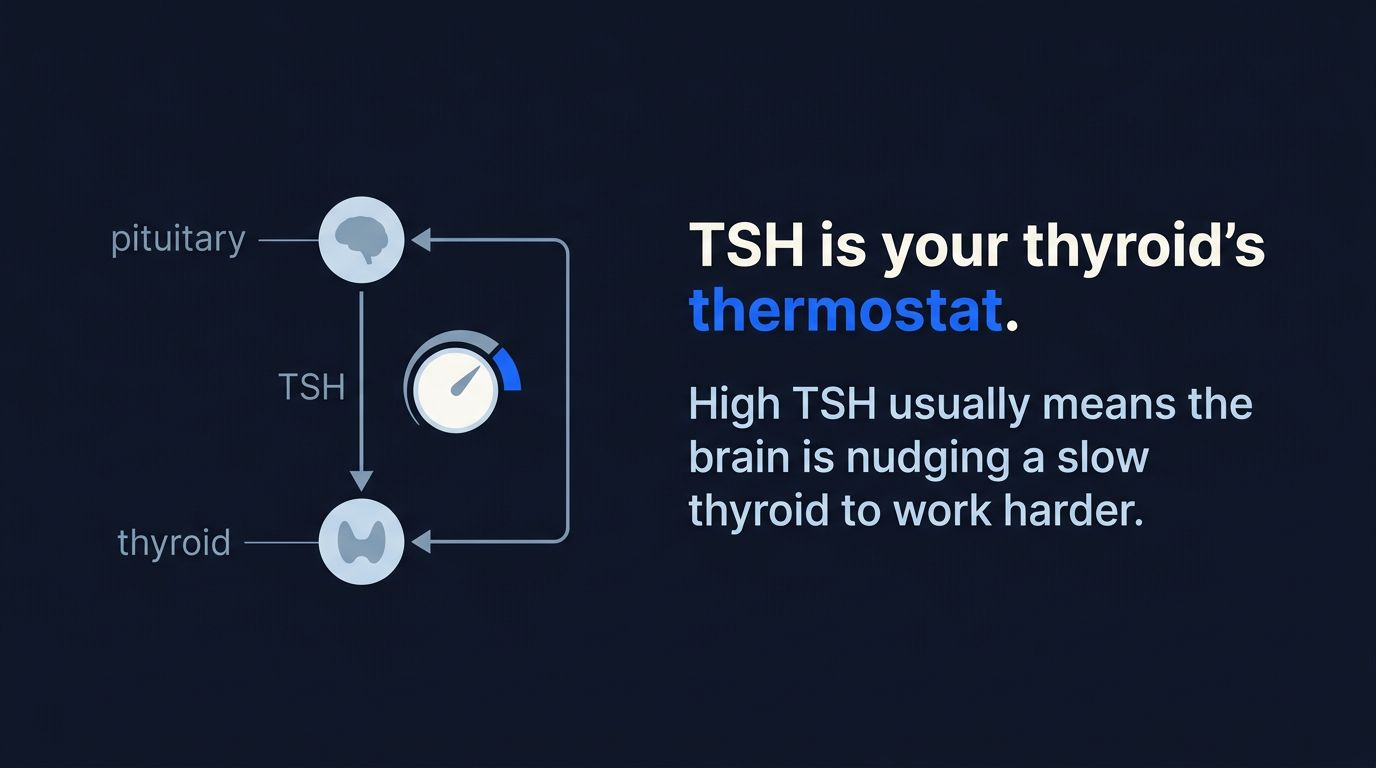
What does high TSH mean?
A high TSH usually means your brain is sending a louder signal to your thyroid, telling it to make more hormone — most often because the thyroid is running a little slow. TSH stands for thyroid-stimulating hormone, and it's the message, not the thyroid hormone itself. On its own a high value doesn't diagnose anything. It's a starting point, normally read alongside free T4 and how you actually feel — and one elevated reading is common enough that it's usually worth confirming before reading much into it.
What is TSH, really?
TSH is made by your pituitary, a small gland at the base of your brain that acts like a thermostat for your thyroid. When the pituitary senses there isn't quite enough thyroid hormone circulating, it raises TSH to tell the thyroid "work harder." When there's plenty, it lowers TSH to ease off.
That thermostat logic is why TSH can feel backwards at first: a high TSH often points to an underactive thyroid, because the brain is shouting at a thyroid that's responding quietly. A low TSH tends to mean the opposite. TSH is sensitive and moves before the thyroid hormones themselves shift much, which makes it a useful early signal — and also why a single reading is a prompt to look closer, not a conclusion.
What's a typical range?
Many labs treat roughly 0.4–4.0 mIU/L (milli-international units per liter) as the typical reference range. The upper cut-off is the part that varies most — it shifts with age, moves during pregnancy, and differs between labs and assays, so what reads as "outside the range" on one report can sit inside it on another.
TSH also swings with the time of day and with recent illness. The practical takeaway: compare your value to the reference range printed on your own report, not to a figure you saw online, and remember that a borderline result is often rechecked rather than acted on immediately.
What does a high TSH mean?
A TSH above your lab's range most often points to an underactive thyroid — the thyroid is making less hormone, so the brain signals louder. How far above the range matters: a value just over the top edge is read very differently from one several times higher. Recovering from a recent illness, certain medications, and ordinary lab-to-lab variation can also nudge TSH up, which is why a lone high reading is commonly confirmed with a repeat test.
What carries the meaning is context — what free T4 is doing, whether the value repeats, and how you feel. This is one signal among many. If it's outside your range, the useful move is to mention it at your next appointment so it can be read alongside free T4 and the rest of your picture.
What does a low TSH mean?
A low TSH tends to point the other way — the brain easing off because there's enough (or too much) thyroid hormone around. Like a high value, it's read together with free T4 and confirmed over time rather than judged on a single result.
What a high TSH doesn't mean
A single high TSH doesn't mean you definitely have a thyroid condition, and it isn't a number to panic over — mildly elevated, one-off values are common and frequently settle on a recheck. It also isn't meaningful in isolation: without free T4 and a repeat reading, one TSH is just one data point. The trend over time and the surrounding context carry far more weight than any single result.
How to track it with Bllod
If TSH shows up on your panel, Bllod keeps it next to free T4 over time, so you can see whether a high reading holds or settles on the next test — instead of comparing PDFs by hand. Upload a lab report and Bllod pulls out every marker, plots the trend, and shows where each value lands in its reference range. Download Bllod for iOS.
FAQ
What does high TSH mean? A high TSH usually means your brain is signaling your thyroid to work harder, often because the thyroid is running slow. On its own it doesn't diagnose anything — it's read with free T4 and usually confirmed on a repeat test.
What is a normal TSH range? Many labs treat roughly 0.4–4.0 mIU/L as the typical reference range, though the upper cut-off varies by lab, age, and pregnancy. Compare your value to the range on your own report.
What causes high TSH? Most often an underactive thyroid. Recovering from illness, some medications, and lab-to-lab variation can also raise it.
Is a high TSH something to worry about? A mildly high, one-off TSH is common and often not urgent. What matters is whether it's confirmed, what free T4 shows, and how you feel.
What is the difference between TSH and free T4? TSH is the brain's signal; free T4 is the actual thyroid hormone in your blood. They're interpreted together because they usually move in opposite directions.
Related articles

Blood Test MarkersNutritional Deficiency
What does low vitamin D mean? — A plain-English guide
Low vitamin D usually means your body's stores of the sunshine vitamin have dipped — common in winter and indoors. Here's what the marker measures and what a low reading does and doesn't mean.
4 min read
Cardiovascular HealthBlood Test Markers
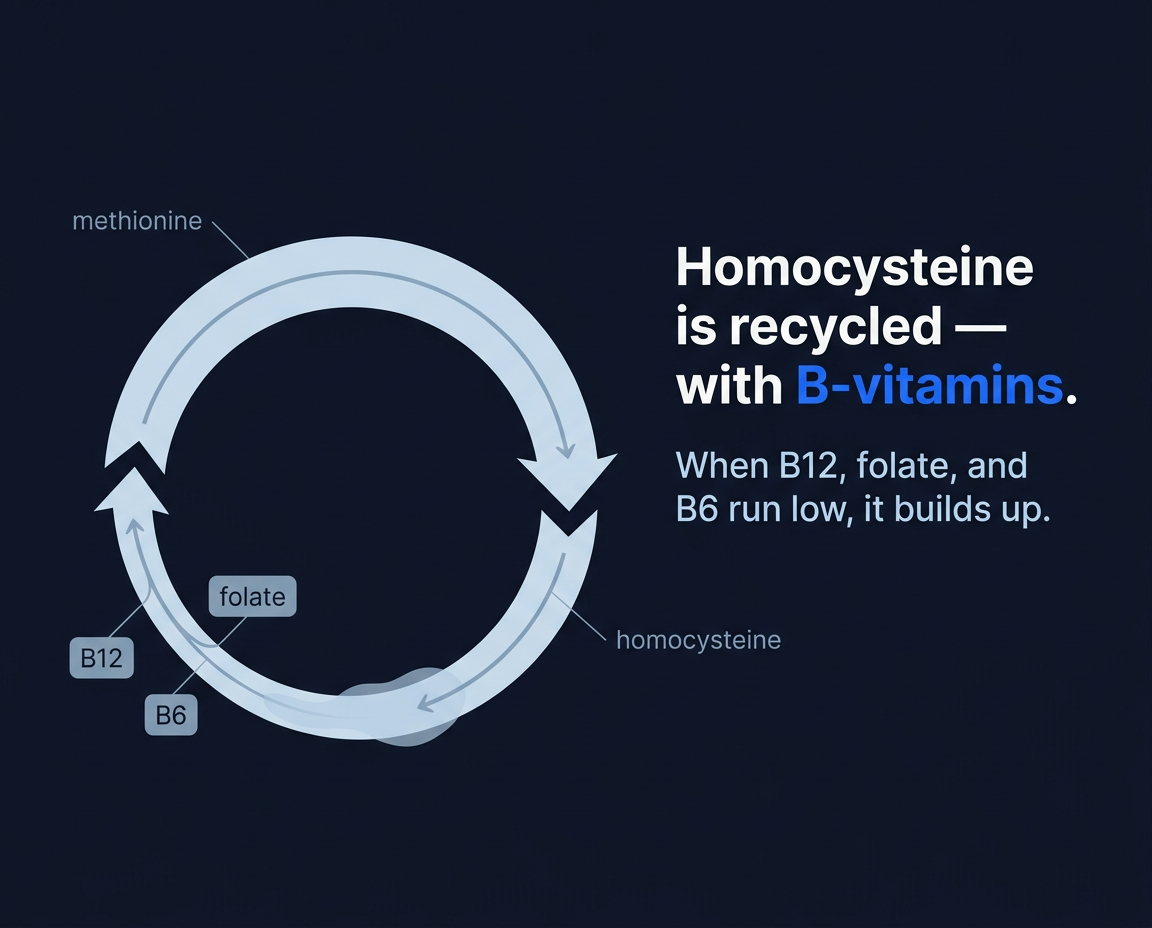
What does high homocysteine mean?
A high homocysteine means more of this amino acid is building up in your blood than your body usually keeps around. Most of the time that happens because the B-vitamins that normally recycle it — B12, folate, and B6 — are running low. On its own it doesn't diagnose anything. It's one signal that, read in context, can flag a B-vitamin gap or add a little color to your cardiovascular picture. That's exactly why it's worth understanding rather than fearing.
4 min read
ALTBlood Test Markers
What does high AST mean?
A high AST means there's more of an enzyme called aspartate aminotransferase in your blood than usual — often because some of the cells that hold it have released it. Those cells live in your liver, but also in your muscles, your heart, and your red blood cells. It's a common and usually mild finding, and on its own it rarely tells the whole story. What it means depends on how high it is, what's sitting next to it on the panel, and where it's been heading over time.
7 min read