What does high AST mean?
A high AST means there's more of an enzyme called aspartate aminotransferase in your blood than usual — often because some of the cells that hold it have released it. Those cells live in your liver, but also in your muscles, your heart, and your red blood cells. It's a common and usually mild finding, and on its own it rarely tells the whole story. What it means depends on how high it is, what's sitting next to it on the panel, and where it's been heading over time.
7 min read
What does high AST mean?
A high AST means there's more of an enzyme called aspartate aminotransferase in your blood than usual — often because some of the cells that hold it have released it. Those cells live in your liver, but also in your muscles, your heart, and your red blood cells. It's a common and usually mild finding, and on its own it rarely tells the whole story. What it means depends on how high it is, what's sitting next to it on the panel, and where it's been heading over time.
What is AST, really?
AST is an enzyme that works inside your cells, helping them process amino acids. Normally it stays put. When a cell is stressed or damaged, a little of it leaks out into the bloodstream — so the amount circulating is a rough gauge of how much cellular wear-and-tear has been happening lately.
The catch is that AST isn't unique to one organ. It's concentrated in the liver, but there's plenty in skeletal muscle, heart muscle, and red blood cells too. That makes it a sensitive signal but not a specific one: a raised AST tells you something released it, not what. (On Brazilian lab reports you'll often see AST listed as TGO; in much of Europe it may appear as GOT.) This is exactly why AST is almost always read next to ALT, a closely related enzyme that's far more specific to the liver.
What's a typical reference range?
Most labs report AST in units per liter (U/L). A common reference range is roughly 10–40 U/L, though it shifts by lab, by assay, and sometimes by sex.
A few honest caveats:
- The range varies between labs. Compare your number to the range printed on your own report, not to one you saw online.
- Mild elevations — a little above the top of the range — are common and frequently temporary.
- A single reading is a snapshot. Where your AST sits across two or three panels says far more than one slightly raised value.
What does a high AST mean for your body?
A raised AST has a long list of everyday explanations, and most of them are not urgent:
- Recent intense exercise. Because AST lives in muscle, a hard or unfamiliar workout in the day or two before your draw can push it up — sometimes a lot — with nothing wrong in your liver.
- Alcohol. Even a heavy weekend can nudge it; a steadier pattern can show up in the readings over time.
- Medications. Some, including certain statins, can raise liver enzymes; this is one of the things a clinician keeps an eye on.
- Fatty liver. Extra fat stored in the liver is one of the most common reasons for a persistently mild elevation, often with ALT raised too.
- Viral or other liver inflammation. Less common, usually with other markers moving alongside.
If your AST is outside the reference range, that's worth bringing up at your next appointment — especially if it stays up across more than one panel. It's one signal among many, not a verdict, and it's a signal that responds well to a calm follow-up with the trend in front of you.
AST vs ALT — and the ratio worth understanding
This is where AST stops being a lonely number. ALT (alanine aminotransferase — TGP in Brazil, GPT in parts of Europe) is the more liver-specific of the pair. So the relationship between the two is often more telling than either alone:
- High AST, in-range ALT often points away from the liver — think muscle, after exercise.
- Both raised together more often points toward the liver itself.
Clinicians sometimes look at the AST:ALT ratio (AST divided by ALT, also called the De Ritis ratio) as a pattern clue. As a rough guide: a ratio below 1 is common with fatty liver, while a ratio around 2 or higher is a pattern often associated with alcohol-related liver stress. The important word is pattern. The ratio is a hint that helps a clinician decide what to look at next — it is not a diagnosis, and a single ratio can be thrown off by all the same everyday factors that move AST on its own.
What a high AST doesn't mean
A few myths worth dismantling:
- "High AST means liver damage." Not necessarily. Because AST also comes from muscle, a gym session can raise it while your liver is completely fine. The company it keeps (ALT, and the trend) is what matters.
- "One high reading is a problem." A single value taken a day after a long run or a big night out can be misleading. The pattern across panels is the real signal.
- "My ratio is high, so I know what's wrong." The AST:ALT ratio is a clue, not an answer. It narrows the conversation; it doesn't end it.
- "Within range means nothing to track." Even an in-range AST is worth watching over time. A value drifting upward year over year, while still inside the range, can be more informative than a one-off number near the top.
How to track AST with Bllod
Bllod pulls AST and ALT (and the rest of your panel) out of your lab PDF in seconds, lines them up over time, and shows the two side by side so the relationship between them is easy to see. You can spot whether a high reading was a one-off after the gym or a slow drift across panels — without a spreadsheet, a patient-portal login, or second-guessing the units. See your bloodwork →
FAQ
What does high AST mean?
A high AST means there's more aspartate aminotransferase in your blood than usual, usually because cells that store it — in your liver, but also your muscles, heart, and red blood cells — have released some. It's a common, often mild finding. On its own it doesn't point to one cause; how high it is, what's alongside it (especially ALT), and where it's heading over time all matter more than a single number.
What's the difference between AST and ALT?
Both are liver enzymes that leak into the blood when cells are stressed, but ALT is more specific to the liver while AST also comes from muscle, heart, and red blood cells. That's why a high AST with an in-range ALT often points toward a non-liver source like exercise, and why clinicians usually read the two together rather than alone.
What does the AST:ALT ratio mean?
The AST:ALT ratio (sometimes called the De Ritis ratio) is AST divided by ALT. It's a pattern clinicians use as a clue, not a diagnosis. A ratio below 1 is common with fatty liver, while a ratio around 2 or higher is a pattern often associated with alcohol-related liver stress. Plenty of things shift it, so a single ratio is a hint to discuss, not an answer.
Can exercise raise your AST?
Yes. AST is found in skeletal muscle, so an intense or unfamiliar workout in the day or two before a blood draw can raise it — sometimes noticeably — without anything being wrong with your liver. If your AST is up but your ALT is within range, recent exercise is a common explanation worth mentioning.
What's a typical AST reference range?
Many labs report roughly 10–40 U/L for AST, though the range varies by lab, assay, and sometimes sex. Compare your value to the range printed on your own report rather than a number you saw online, and look at the trend across panels instead of a single reading.
This piece is informational, not medical advice. Bllod helps you see and track your bloodwork over time — bring outliers and trends to your next appointment with a clinician you trust.
Related articles

Blood Test MarkersNutritional Deficiency
What does low vitamin D mean? — A plain-English guide
Low vitamin D usually means your body's stores of the sunshine vitamin have dipped — common in winter and indoors. Here's what the marker measures and what a low reading does and doesn't mean.
4 min read
Thyroid HealthHypothyroidism
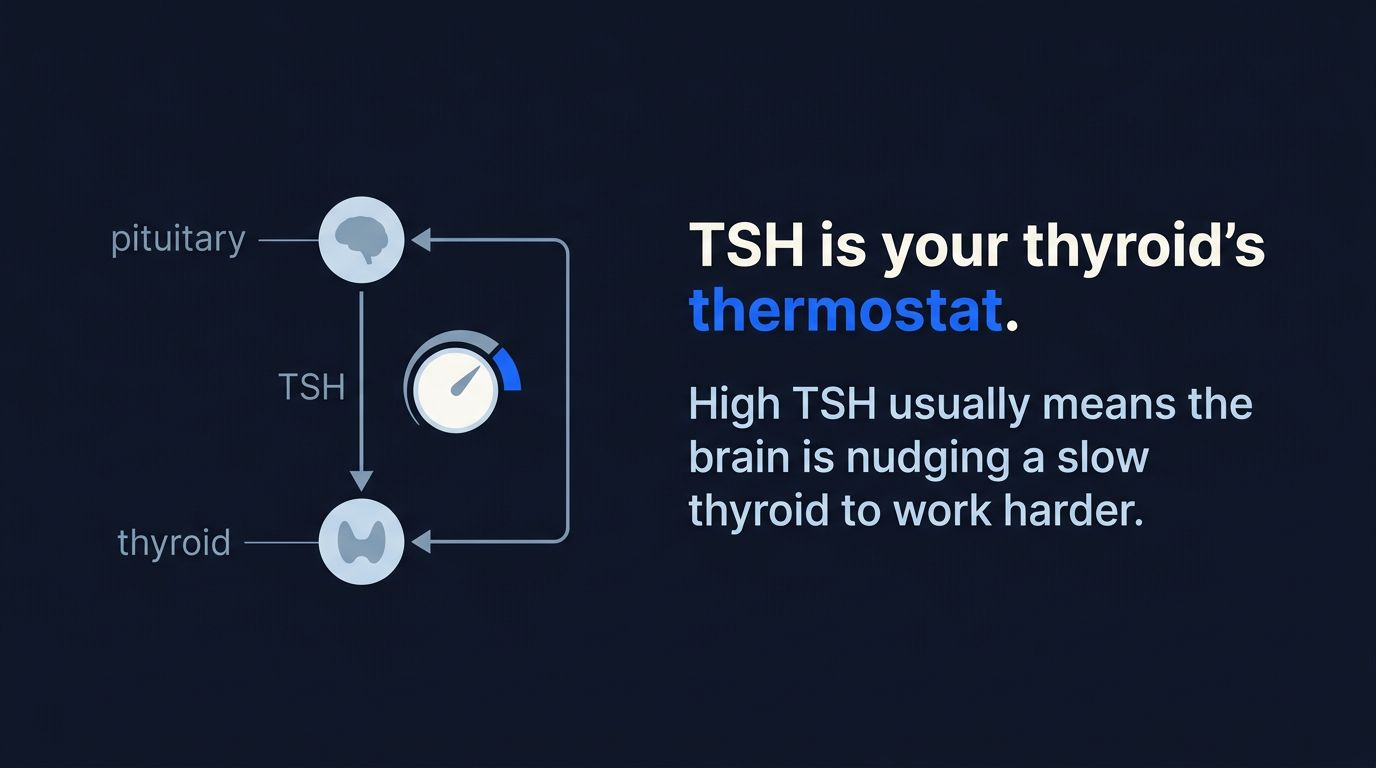
What does high TSH mean? — A plain-English guide
High TSH usually means your brain is nudging your thyroid to work harder. Here's what the marker measures, why it matters, and what to do next.
4 min read
Cardiovascular HealthBlood Test Markers
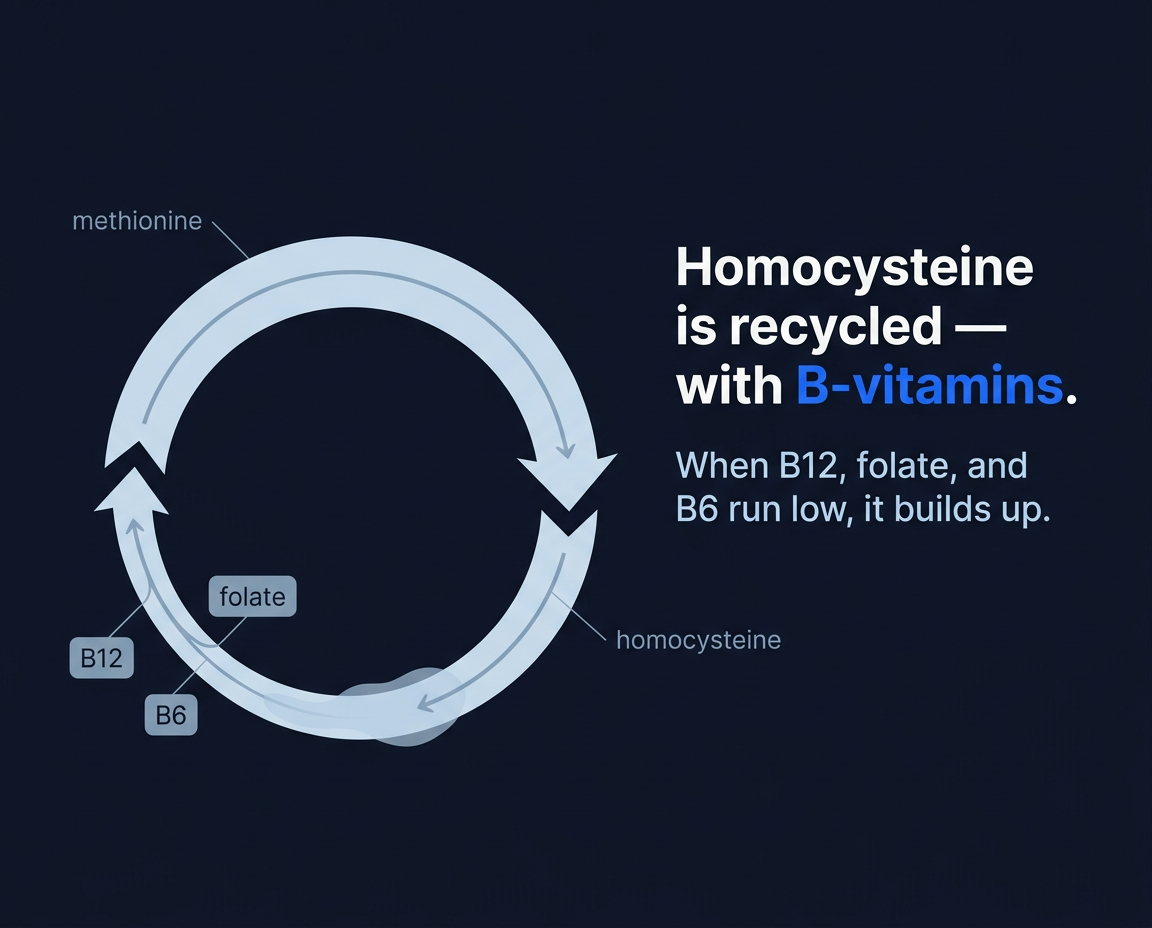
What does high homocysteine mean?
A high homocysteine means more of this amino acid is building up in your blood than your body usually keeps around. Most of the time that happens because the B-vitamins that normally recycle it — B12, folate, and B6 — are running low. On its own it doesn't diagnose anything. It's one signal that, read in context, can flag a B-vitamin gap or add a little color to your cardiovascular picture. That's exactly why it's worth understanding rather than fearing.
4 min read