What does low vitamin D mean? — A plain-English guide
Low vitamin D usually means your body's stores of the sunshine vitamin have dipped — common in winter and indoors. Here's what the marker measures and what a low reading does and doesn't mean.
4 min read

What does low vitamin D mean?
A low vitamin D result usually means your body's stored level of the "sunshine vitamin" has dipped below the range your lab treats as typical. The blood test measures 25-hydroxyvitamin D — the storage form — and low readings are extremely common, especially in the darker months and for anyone who spends most of the day indoors. On its own, a low value doesn't diagnose anything. It's a starting point, normally read alongside how you feel and your wider history — and one reading is usually worth confirming before reading too much into it.
What is vitamin D, really?
Vitamin D isn't quite a vitamin in the usual sense — your skin makes most of it when sunlight hits it, and only a little comes from food. Once made or eaten, it travels to your liver and gets converted into 25-hydroxyvitamin D, the form that circulates and gets stored. That's the form the blood test measures, because it tracks your overall supply better than the short-lived active form your kidneys switch on as needed.
Vitamin D's day job is helping your gut absorb calcium and phosphate, which keeps bones and teeth solid. It also plays quieter roles in muscle function and the immune system. That's why the conversation around a low reading tends to circle back to bones first, then energy and immunity.
Why does it dip in winter?
Because the raw material is sunlight. In the low-sun months — and right now, that's winter in the southern hemisphere — the sun sits lower, days are shorter, and more skin stays covered. Less UVB reaching your skin means less vitamin D made. Latitude, indoor work, sunscreen, older age, and darker skin all reduce production too, which is why "low in winter" is one of the most ordinary lab findings there is. It doesn't make it meaningless; it makes it seasonal.
What's a typical range?
Many labs treat roughly 30–100 ng/mL (about 75–250 nmol/L) of 25-hydroxyvitamin D as sufficient. Below that, 20–30 ng/mL is often labelled insufficient and below 20 ng/mL deficient. But the "sufficient" line is genuinely contested — different labs and health bodies draw it in slightly different places, so a value that reads as low on one report can sit inside the range on another. Always compare your number to the range printed on your own result, and note the units, since ng/mL and nmol/L differ by a factor of about 2.5.
What does a low reading mean?
Mostly, that your stores have run down — commonly from low sun exposure. A low value can line up with tiredness, achy muscles, or more frequent minor illness for some people, but plenty of people with low readings feel fine, and plenty of tired people have perfectly normal vitamin D. That's the honest part: the marker is one signal among many, not a verdict. What it's good at is showing a direction over time — a level that's drifted down across a couple of winters, or crept back up after a change in routine, tells you more than any single number.
What it doesn't mean
A low vitamin D reading is not a diagnosis, and it isn't a cue to panic or to start high-dose supplements on your own — too much vitamin D carries its own risks, which is exactly why the dose and the follow-up are a conversation with a clinician. It also doesn't mean your bones are failing; it means one input to bone health is lower than typical right now. And a single low value in winter, with no other context, is often just that: winter.
How to track it with Bllod
Because vitamin D moves with the seasons, it's a marker where the trend does the real talking. In Bllod you can upload each panel and watch your 25-hydroxyvitamin D across winters and summers on one timeline, with each value read against your own lab's range — so a low winter reading sits in context instead of arriving as a scare. Understanding the pattern is the point; the single number is just where it starts.
This article is for general education and isn't medical advice. If a result is outside your reference range, talk to a clinician about what it means for you.
Related articles
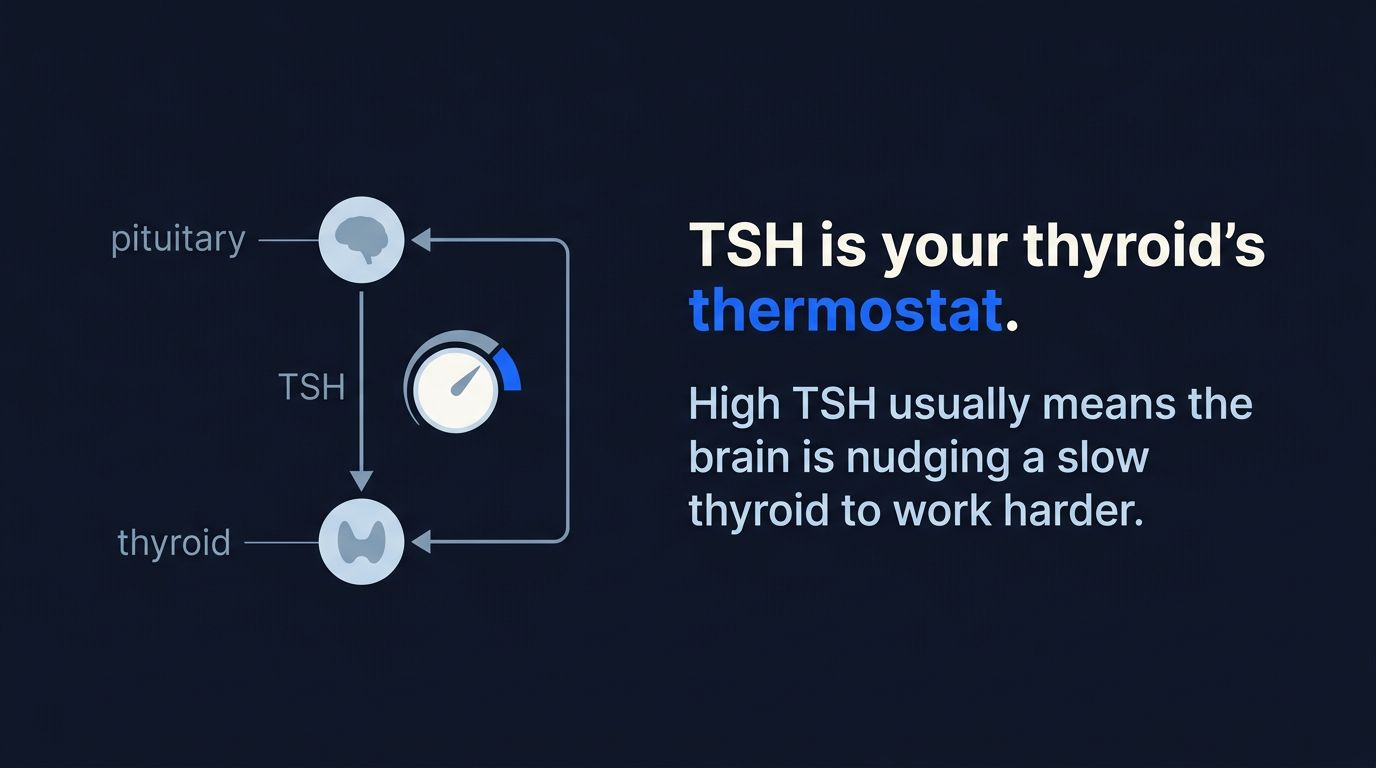
Thyroid HealthHypothyroidism
What does high TSH mean? — A plain-English guide
High TSH usually means your brain is nudging your thyroid to work harder. Here's what the marker measures, why it matters, and what to do next.
4 min read
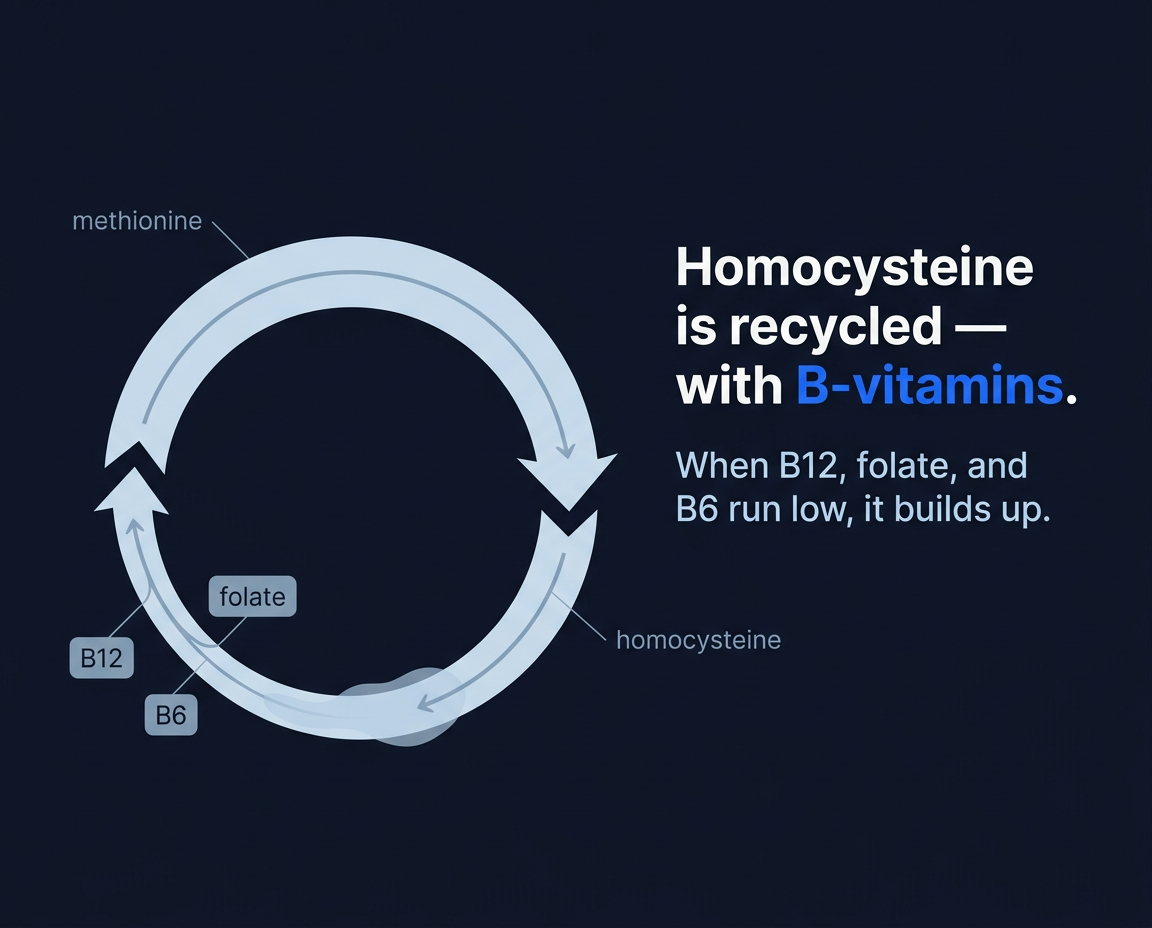
Cardiovascular HealthBlood Test Markers
What does high homocysteine mean?
A high homocysteine means more of this amino acid is building up in your blood than your body usually keeps around. Most of the time that happens because the B-vitamins that normally recycle it — B12, folate, and B6 — are running low. On its own it doesn't diagnose anything. It's one signal that, read in context, can flag a B-vitamin gap or add a little color to your cardiovascular picture. That's exactly why it's worth understanding rather than fearing.
4 min read
ALTBlood Test Markers
What does high AST mean?
A high AST means there's more of an enzyme called aspartate aminotransferase in your blood than usual — often because some of the cells that hold it have released it. Those cells live in your liver, but also in your muscles, your heart, and your red blood cells. It's a common and usually mild finding, and on its own it rarely tells the whole story. What it means depends on how high it is, what's sitting next to it on the panel, and where it's been heading over time.
7 min read