What does low B12 mean?
Low B12 means your body doesn't have enough vitamin B12 — also called **cobalamin** — circulating to keep up with what your cells need it for. That's a long list: making red blood cells, copying DNA, and maintaining the myelin sheath that wraps your nerves so signals travel cleanly. When B12 runs low, those processes get sloppy. You feel it before the bloodwork shows it.
6 min read

What does low B12 mean?
Low B12 means your body doesn't have enough vitamin B12 — also called cobalamin — circulating to keep up with what your cells need it for. That's a long list: making red blood cells, copying DNA, and maintaining the myelin sheath that wraps your nerves so signals travel cleanly. When B12 runs low, those processes get sloppy. You feel it before the bloodwork shows it.
What is B12, really?
B12 is a water-soluble vitamin your body can't make on its own. It comes almost entirely from animal foods (meat, fish, eggs, dairy) or from fortified products and supplements. Your stomach needs to release a protein called intrinsic factor to absorb it; that handshake happens in the lower part of the small intestine. Anything that disrupts that pathway — low stomach acid, autoimmune attack on intrinsic factor, gut surgery, certain medications — can drop your B12 even if you're eating plenty.
Once absorbed, B12 is stored in the liver, which is why deficiency can take years to develop. It also means that once you correct it, levels rebound slowly and the trend matters more than a single reading.
What's a typical reference range?
Most labs report total B12 in pg/mL (or pmol/L in countries using SI units). A common reference range is roughly 200–900 pg/mL (around 148–664 pmol/L), with values under about 200 pg/mL often flagged as deficient.
A few honest caveats:
- The range varies by lab and assay. Compare your number to the range printed on your own report, not to a number you saw online.
- The "grey zone" between roughly 200 and 400 pg/mL is where total B12 is least informative. People in this band can have symptoms despite a "within range" result.
- More specific tests — active B12 (holotranscobalamin), methylmalonic acid (MMA), and homocysteine — can clarify whether the B12 your body can actually use is low, especially in that grey zone.
What does low B12 mean for your body?
Low B12 doesn't just mean "you might get anemia." It tends to show up in three buckets, often in this order:
Energy and mood
Fatigue that doesn't track with how much you slept. Brain fog. Sometimes low mood or apathy that feels chemical rather than situational. These can appear well before the complete blood count looks different.
The nervous system
Tingling, numbness, or a "buzzing" feeling in the hands and feet. Trouble with balance. In long-standing untreated deficiency, the nerve effects can become harder to fully reverse — which is part of why catching B12 early matters more than catching, say, low vitamin D.
Red blood cells
Eventually, B12 deficiency interferes with red cell production and you can develop macrocytic anemia — red cells that are larger than they should be (high MCV on a CBC). By the time this shows up, deficiency has usually been brewing for a while.
If your B12 is outside the reference range — or if you're in the grey zone with symptoms — this is worth bringing up at your next appointment. It's one signal among many, but it's a signal that responds well to follow-up.
What does high B12 mean?
For most people the answer is "you're supplementing." A B12 supplement, a B-complex, or a recent injection will all push the number up, sometimes well above the upper reference limit, and that's not on its own a problem.
In someone who isn't supplementing, a persistently high B12 is less common and worth mentioning to a doctor — it can occasionally show up alongside liver issues, certain blood disorders, or kidney problems that affect how B12 is cleared. The key word is persistent: a single high reading in isolation rarely means much.
What low B12 doesn't mean
A few myths worth dismantling:
- "Low B12 = vegan diet." It can be, but it often isn't. The most common cause in older adults is reduced absorption, not low intake.
- "My CBC is fine, so my B12 is fine." A within-range hemogram doesn't rule out B12 deficiency. The nerve symptoms can outpace the red-cell symptoms by years.
- "Higher is always better." Total B12 well above the reference range, in someone supplementing, isn't a benefit — it just means you're absorbing the supplement. The body uses what it needs and excretes the rest.
- "One reading tells the story." B12 fluctuates and depends on how recently you ate, drank, or took a supplement. A trend over two or three readings is far more informative than any single number.
How to track B12 with Bllod
Bllod pulls B12 (and the rest of your panel) out of your lab PDF in seconds and lines up the readings over time. You see whether your number is drifting, whether it's stable inside the grey zone, or whether the last test moved into deficiency territory. No spreadsheet, no patient-portal logins, no second-guessing the units. Try Bllod free.
FAQ
What does low B12 mean?
Low B12 means your body doesn't have enough vitamin B12 (cobalamin) circulating to support red cell production, DNA synthesis, and the protective coating around your nerves. It often shows up as fatigue, brain fog, or tingling in the hands and feet — sometimes years before anemia is visible on a complete blood count.
Can you feel low B12 before it shows up on bloodwork?
Yes, often. B12 deficiency tends to affect the nervous system before red blood cells, so symptoms like fatigue, low mood, and tingling can appear while a basic hemogram still looks within range. Active B12 (holotranscobalamin) and methylmalonic acid tests can catch deficiency earlier than total B12 alone.
Who is at higher risk of low B12?
People who eat little or no animal products, anyone over 50 (absorption drops with age), people on long-term metformin or proton-pump inhibitors, and anyone with pernicious anemia, celiac disease, or a history of gastric surgery. None of these mean you'll be low — they just mean it's worth checking.
What's a typical B12 reference range?
Many labs report 200–900 pg/mL (148–664 pmol/L) as the reference range for total B12, with values under roughly 200 pg/mL often flagged as deficient. The range varies by lab and by assay, and the grey zone between 200–400 pg/mL is where active B12 and methylmalonic acid tests help clarify.
Is high B12 something to worry about?
Very high B12 in someone who isn't supplementing is uncommon and worth mentioning to a doctor — it can show up alongside liver issues, certain blood disorders, or kidney problems. If you're taking a B12 supplement or a B-complex, a high reading usually just reflects that.
This piece is informational, not medical advice. Bllod helps you see and track your bloodwork over time — bring outliers and trends to your next appointment with a clinician you trust.
Related articles

Blood Test MarkersNutritional Deficiency
What does low vitamin D mean? — A plain-English guide
Low vitamin D usually means your body's stores of the sunshine vitamin have dipped — common in winter and indoors. Here's what the marker measures and what a low reading does and doesn't mean.
4 min read
Thyroid HealthHypothyroidism
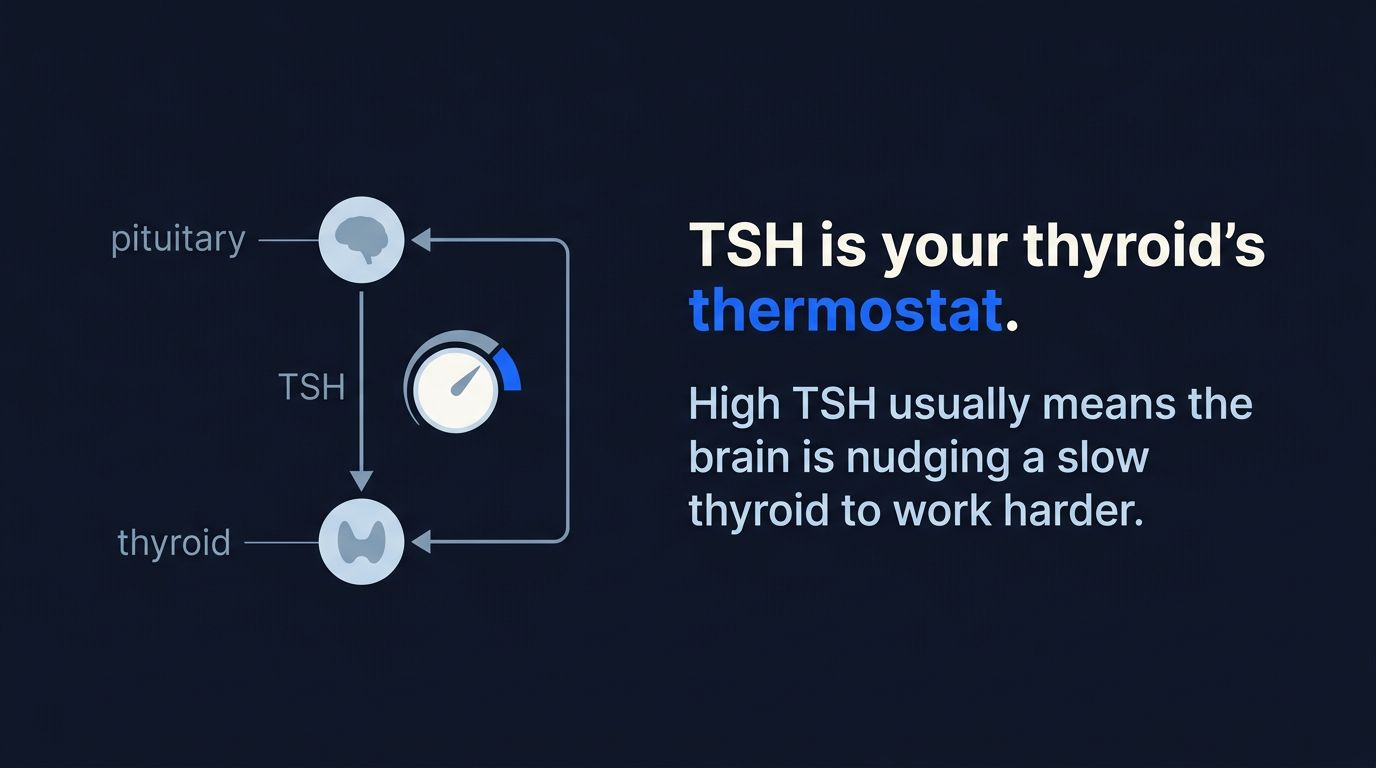
What does high TSH mean? — A plain-English guide
High TSH usually means your brain is nudging your thyroid to work harder. Here's what the marker measures, why it matters, and what to do next.
4 min read
Cardiovascular HealthBlood Test Markers
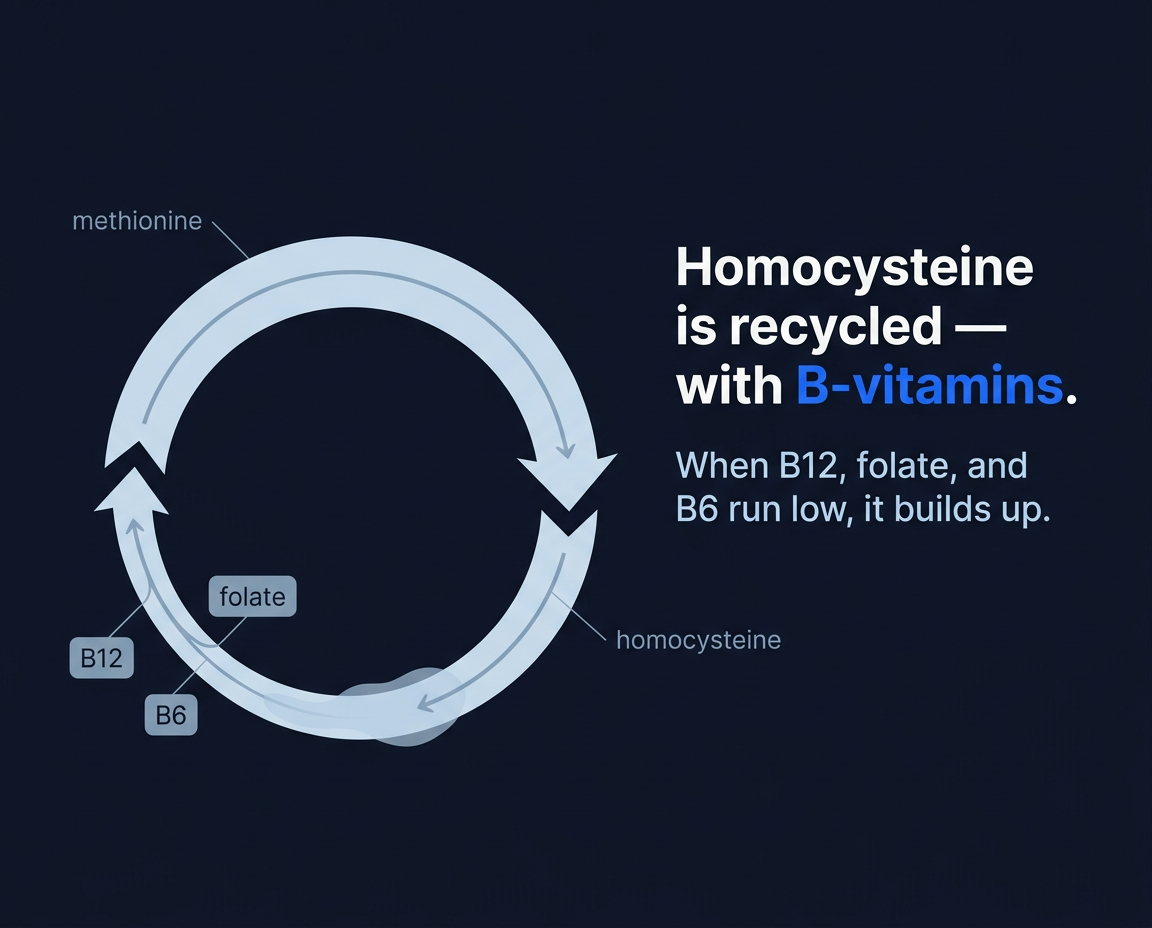
What does high homocysteine mean?
A high homocysteine means more of this amino acid is building up in your blood than your body usually keeps around. Most of the time that happens because the B-vitamins that normally recycle it — B12, folate, and B6 — are running low. On its own it doesn't diagnose anything. It's one signal that, read in context, can flag a B-vitamin gap or add a little color to your cardiovascular picture. That's exactly why it's worth understanding rather than fearing.
4 min read